
Knowing how to secure a construction site saves you money, time and stress. Theft and vandalism cause delays, insurance claims and lost materials, and an open site is also a safety risk to anyone who wanders in. This guide covers the main risks, a step-by-step plan, a quick self-check, and the types of security cover available.
Why construction sites are targeted
- Valuable, easy-to-sell items. Plant, power tools, copper pipe, cable, timber and fuel are left on site and can be sold on quickly.
- Open or temporary boundaries. Fencing and hoarding move as the build moves, so gaps appear.
- Quiet nights and weekends. Most sites are empty for more than half the week, and many are in areas with little passing traffic.
- Vandalism and trespass. Graffiti, damage and people using the site as a shortcut or a place to hang out, which also creates a safety risk for you as the site owner.
Recent thefts in Hampshire
- Kingsclere, October 2026: an industrial unit was broken into and angle grinders were stolen, with damage and theft believed to exceed £45,000. (Hampshire and Isle of Wight Constabulary, 25 Oct 2026)
- Fordingbridge, July 2026: a plate compactor was stolen in the middle of the afternoon from a roadworks site in Marl Lane. (Stour & Avon Magazine, 14 Aug 2026)
- Across Hampshire, June 2025 to March 2026: a police rural task force recovered £463,300 of stolen plant and farm machinery. (Hits Radio, 9 May 2026)
Figures checked November 2026.
How to secure a construction site: 10 steps
- Secure the perimeter. Use solid fencing or hoarding with no gaps, and check it at the end of every day, especially where it has been moved.
- Control the gates. Keep to as few entrances as possible, lock them out of hours, and use strong locks and chains.
- Control who comes in. Sign workers, visitors and deliveries in and out, and give visitors passes so strangers stand out.
- Light the site. Light the compound, gates, cabins and storage areas, ideally with motion-sensor lights.
- Lock away tools and small plant. Use secure containers, and never leave tools in vans or open cabins overnight.
- Immobilise and mark plant. Remove keys, fit immobilisers or wheel clamps, and mark and register machinery so it can be traced if stolen.
- Protect fuel and high-value materials. Keep fuel in locked bowsers or drain it, and time deliveries of copper, cable and timber so they are not left on site for long.
- Fit CCTV and an alarm. Cover the gates and storage areas, and make sure the alarm has a working call list.
- Put up clear signs. Signs warning that the site is guarded, monitored and dangerous deter casual intruders and help with your duty of care.
- Arrange out-of-hours security. Choose static guarding, mobile patrols, alarm response or a mix, based on the risk. See the options below.
Is your site secure? A quick self-check
Answer these honestly. Each “no” is a weak spot to fix before you decide how to secure a construction site out of hours.
- Is the perimeter complete, with no gaps, low sections or damaged panels?
- Are the gates locked every night, and does someone check them?
- Do you know who is on site at all times, including visitors and delivery drivers?
- Are tools, small plant and materials locked away at the end of the day?
- Is the compound well lit after dark?
- Do the cameras actually record, and do they cover the gates and storage?
- Is there someone who can be called at any time if the alarm goes off?
- Is there someone on site, or visiting, outside working hours?
Which type of security cover does your site need?
| Type of cover | What it is | Best for |
|---|---|---|
| Static guarding | An SIA-licensed officer on site for the whole shift: nights, weekends or 24/7 | High-value sites, open or changing perimeters, plant left on site |
| Mobile patrols | Set or random visits through the night, with lock-up checks | Well-fenced, lower-risk sites, at a lower cost |
| Alarm response | An officer attends when the site alarm goes off | Sites with an alarm, so you are not called out at night |
| CCTV monitoring | Cameras watched remotely, with a response when something is seen | Large or remote sites, alongside guards or patrols |
| Security dog handlers | NASDU-accredited handlers and dogs | Large, remote or high-risk sites that need a stronger deterrent |
| Fire watch | Officers to watch for fire during hot works or after fire alarm faults | Sites with temporary fire risks |
Static guard or mobile patrol?
Part of knowing how to secure a construction site is matching the cover to the risk. If the site has valuable plant or materials, an open boundary or a history of problems, a static guard is usually the safer choice, because someone is there all the time to challenge intruders. If the site is well fenced and lower risk, mobile patrols through the night can be enough and cost less. Many sites use a static guard over weekends and bank holidays, and patrols on weeknights.
Security for residential, commercial and public sector builds
- Housing developments. Large, open sites with show homes and new residents nearby. Patrols and gate control help keep the site safe as each phase completes.
- Commercial and industrial builds. Often high-value plant and materials, so static guarding and CCTV are common.
- Public sector projects. Schools, hospitals and council buildings often need officers who are used to working with the public and following strict sign-in rules.
- Refurbishments and empty buildings. Buildings awaiting work are at risk of squatters and theft. See our void property security.
What our officers do on a construction site
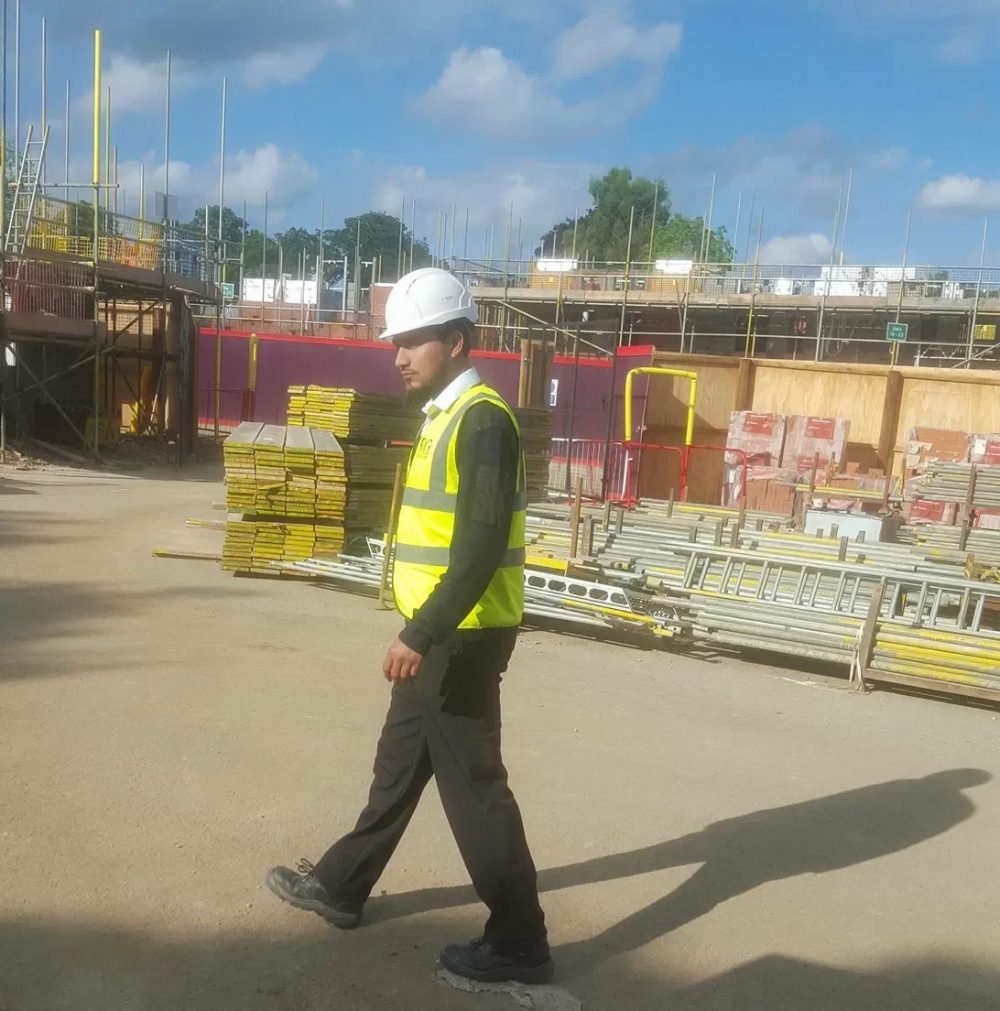
- Control the gate and check people, vehicles and deliveries in and out
- Patrol the site, compound, welfare units and plant at regular intervals
- Check that plant, containers and gates are locked at the end of the day
- Note damaged fencing, open gates, lighting faults and anything suspicious
- Report to RG every hour of the shift, with reports available whenever you ask
- Stay on our lone worker system, with regular check calls
Read more about our construction site security service and our Christmas shutdown checklist.
Areas we cover
We secure construction sites across Hampshire, including Southampton, Eastleigh, Winchester, Portsmouth, Basingstoke and Fareham, and parts of Dorset, Wiltshire, West Sussex and Berkshire. See all the areas we cover.
Questions we get asked
How do I secure a construction site out of hours?
Close and lock the perimeter, lock away tools and plant, light the compound and gates, and set the alarm. Then add security cover: a static guard on site through the night, or mobile patrols that visit at set or random times and check the site is locked up.
Do I need a security guard or is CCTV enough?
CCTV records what happens and can deter casual intruders, but it cannot stop anyone on its own. A static guard can challenge people at the gate and deal with problems straight away. Many sites use both: cameras across the site and an officer or patrols out of hours.
How much does construction site security cost?
It depends on the size of the site, the hours, whether you need a static guard or patrols, and how long the project runs. Tell us those details and we will give you a figure.
Can you cover a site for just a few nights?
Yes. We can cover a single night, a weekend, a bank holiday or the whole project, and step up cover over the Christmas shutdown.
Are your security officers licensed?
Yes. Every security officer we supply holds an SIA licence, which means they have passed approved training and background checks.
Get your site secured
RG Security has 10 years in the industry, and every officer holds an SIA licence.
Not sure how to secure a construction site of your size? Call 023 8181 0000 or email info@rgsecurity.co.uk with your site address, the hours you need covered and what is on site.
© 2026 RG Security Ltd. All rights reserved. This guide may not be copied or republished without permission.